

news and releases
Where Is The Menswear At Haute Couture Week?
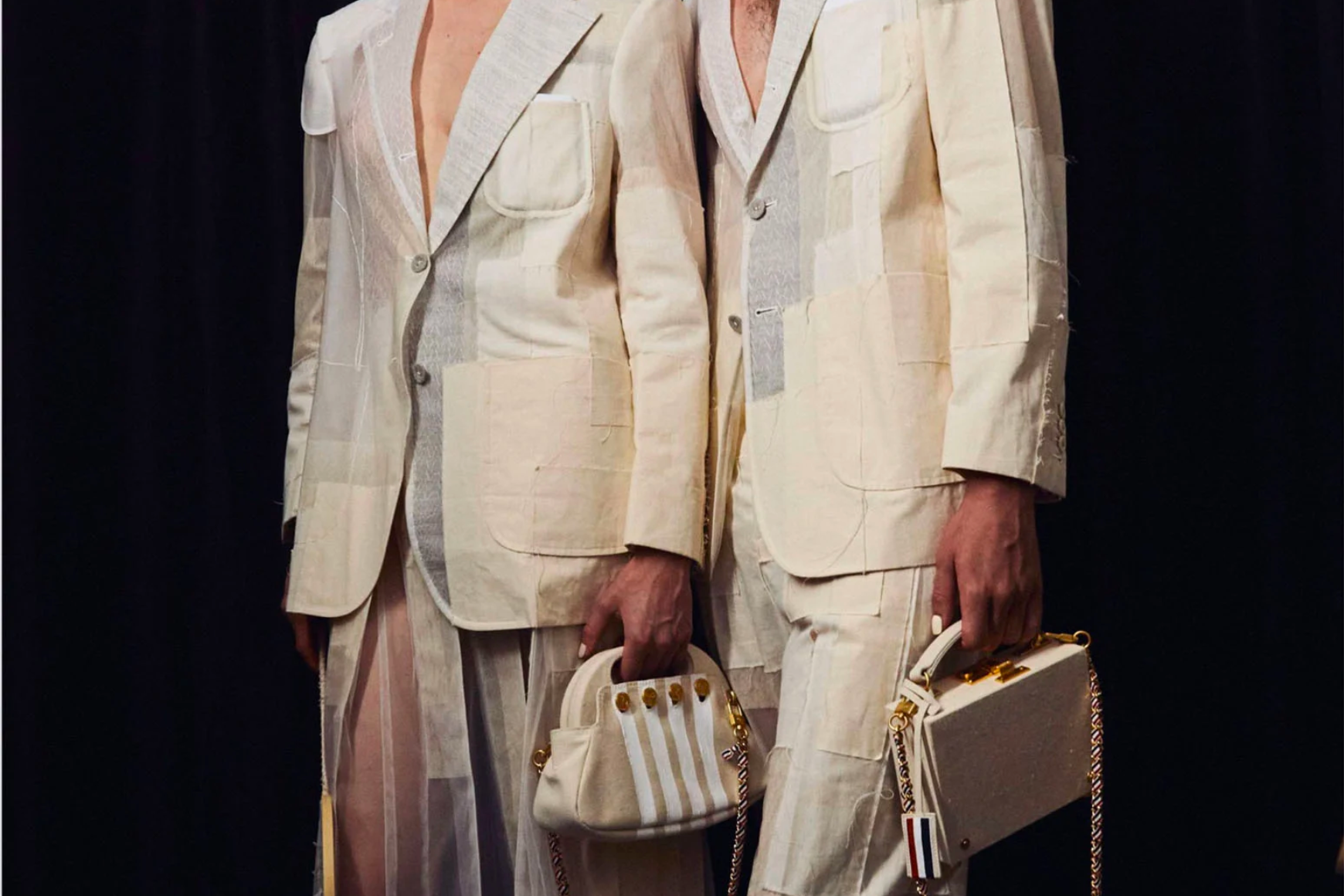
(photo credit: Thome Browne)
The last day of Paris Haute Couture Week has drawn to a close, and amongst the dazzling creations and talent presented in the Autumn 2024 collections, a recurring theme emerges: most of the designers are men, while most of the clothes are for women.
These observations have become expected, something we are used to and take for granted in the fashion industry. Despite significant strides in representation, more men are designing for women now than 100 years ago, especially in visible positions like creative directors and head designers, though many women work behind the scenes in design and sartorial teams.
While unisex and genderless clothing are on the rise, most brands still divide their collections in the traditional way for convenience. This structure is maintained during fashion week, however, we have started seeing more of a mixed bag, where brands include female models at their menswear shows and vice versa.
This is the case for haute couture too, with some brands including male-oriented looks amongst a majority of pieces clearly created for the female form. Of course, anyone can wear anything they want regardless of gender, but for the sake of this argument, I'll consider how designers presented their creations at fashion week.
Haute couture refers to handmade, unique, and custom-made garments, while ready-to-wear clothing is produced in larger quantities in factories. So, could a tailored suit be considered haute couture? If it's bespoke and made with top-quality fabrics, absolutely. In that sense, a significant portion of couture is dedicated to men—a portion that was even larger before the rise of ready-to-wear fashion.
However, the runway tells a different story. This year, only Thom Browne achieved some balance, featuring roughly 18 male looks out of 48, with many pieces being versatile enough for anyone to wear. In contrast, Elie Saab showcased just 3 male looks out of 64, while major names like Chanel, Armani Privé, and Schiaparelli presented exclusively women's collections.
Designers typically specialize in either men's or women's fashion, but why is there such a strong tendency to favor feminine designs, especially in couture?
Is there a more profitable and identifiable female customer base? Probably. Is it more fun to create elaborate, extravagant garments for women? Also likely. Much of couture enhances or plays with feminine details, and many designers prefer to work with sinuous lines of the female than the straighter, broader male form.
Haute couture represents the pinnacle of exclusivity and expense in the fashion world. It stands for ‘high art of sewing or tailoring,’ providing an outlet for designers and their atelier teams to push their talent and patience to the limits. They often employ complex techniques or invest hundreds of hours in needlework to create special fabrics and ornate detailing.
There is a world of possibilities in men’s fashion, and the craftsmanship involved is what makes it desirable, whether through extravagant shapes or subtle, curated details like the lining of a suit.
Yet, male couture rarely captures attention and is seldom the main focus in reviews or news posts. Creating new or altered silhouettes requires effort and out-of-the-box thinking.
Innovation and originality can be more challenging due to traditional expectations in men's fashion, where the options seem stuck between making suits or putting men in dresses. Changing the mindset that men's fashion is more boring than women's is crucial for its evolution.
There are exceptions, though, and one standout at fashion week was Robert Wun. This promising designer has only showcased three couture collections so far but has already impressed the world with his imagination and skill.
He created fashion influencer Wisdm’s Met Gala look, which was one of the best of the night. His men’s couture, while less prominent than his women’s designs, was just as mesmerizing.
He is establishing his house codes, reaffirming many details and motifs from previous collections, such as burnt effects, umbrellas, and the illusion of precipitation-soaked clothing. Previously, we had seen rain droplets; this season, it was snow.
Thom Browne weaves captivating narratives through his collections, transporting the audience into dreamlike realms. In his latest show, he elevated toile, typically used for prototypes, to couture status, transforming humble fabric into art.
His atelier skillfully manipulated untreated muslin, presenting garments that appeared deconstructed and unfinished, but on the contrary, were subject to immense detail and meticulously care.
Many looks were based on the idea of a suit, yes, but he showed ways of deconstructing it that other people would never think of. Some ensembles were so intricately layered that discerning the number of layers or identifying their components became a challenge. He also put men in dresses, of course.
At Balenciaga, Demna was questioning traditional notions of couture. He wanted to prove that it’s not just about the materials being lavish or beautifully embellished, but about the craftsmanship that goes into it. Many hours of work went into the pieces, where Demna’s style was evident in stitched-together scraps of sportswear and jerseys.
But despite his effort, the whole collection still seemed more like ready-to-wear than couture. He does get points for achieving a good balance of genders though with almost half the models male and many unisex pieces.
Rahul Mishra had an amazing collection inspired by auras; however, all the most unique garments were worn by women. He has such talent that could have been poured into the male looks too, but instead, they seemed more like an accessory to the gorgeous women’s ensembles.
In conclusion, there is potential for more men's couture, and there is a wealth of experimentation and creativity to be unlocked. If the demand isn’t there though, it won’t happen.
Though we all enjoy watching, couture is only worn by a select few people: this includes a wider range of men who want bespoke suits, and a more exclusive clientele, mostly in show business, who aim to entertain fans with their fashion choices at special events like red carpets and on stage. The latter is where the more unconventional and fascinating couture emerges.
Ultimately, the future of men's couture lies in the hands of innovative designers and a growing willingness to dress differently that influence this exclusive realm of fashion.
Copyright and Content Use Notice
At THREADSPY we respect copyright and intellectual property rights. The images on this page are the property of their respective owners. If you wish for your content to be removed, please contact: [email protected].
You might also like